Katrin von Lehmann
Plants 1850s and 2024
Fragment of Abundance
I heard of the Iter Angolense Herbarium (Angolan Expedition) for the first time in 2023. Friedrich Welwitsch, an Austrian national, and his expedition (1853–1860) to the former Portuguese colony were introduced to me by Ana Isabel Dias Correia, botanist and curator at the Museu Nacional de História Natural e da Ciência (MUHNAC). Here, in a climatised room, I viewed a small selection from the near 8,000 plant species brought to Lisbon by Welwitsch. To inspect these plants which had been gathered, examined, fragmented, dried, packed and shipped in the mid-19th century was a special moment.
I learned that the internationally recognised format for herbaria is 41 x 30 cm. The plants all share a similar brownish colour and are attractively mounted on the herbarium sheet with the help of white adhesive strips. Annotations by Welwitsch and later botanists can be read in the margins. Fruits, seeds and inflorescences are kept in small unfoldable paper pockets. The Iter Angolense Herbarium is still today esteemed to be exceptional. Welwitsch was in regular correspondence with naturalists such as Charles Darwin. He was also an advocate of Alexander von Humboldt’s vegetation geography, in which plant growth is studied in relation to geographical sites.
As a draughtswoman, I am implicated in the correlation between two- and three-dimensionality. The fact that it is worldwide practice for botanists to collect plant specimens and subsequently flatten them for the benefit of scientific research was a strong motivation to develop an artistic project on the Iter Angolense Herbarium.
Helmut Dolezal’s publication on Friedrich Welwitsch (1959) gave me an awareness of the political dimension of a botanical expedition. Welwitsch had signed a contract with the Portuguese royal court in which he agreed to document observations on the climate, geography, cultivated areas, eating habits, and transport routes of the colony. Portugal used this information to consolidate its supremacy over the Angolan population. Angola gained independence in 1975.
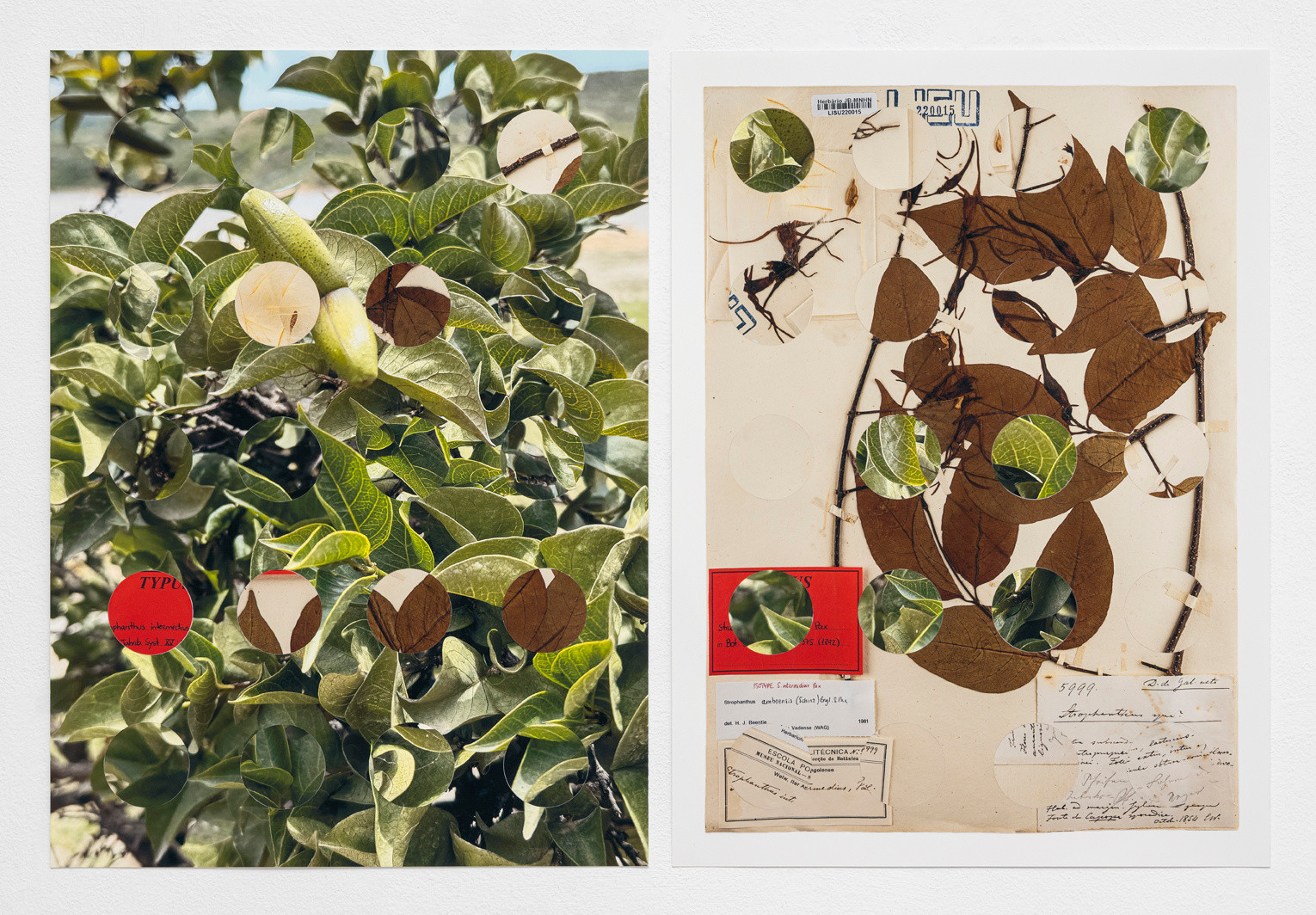
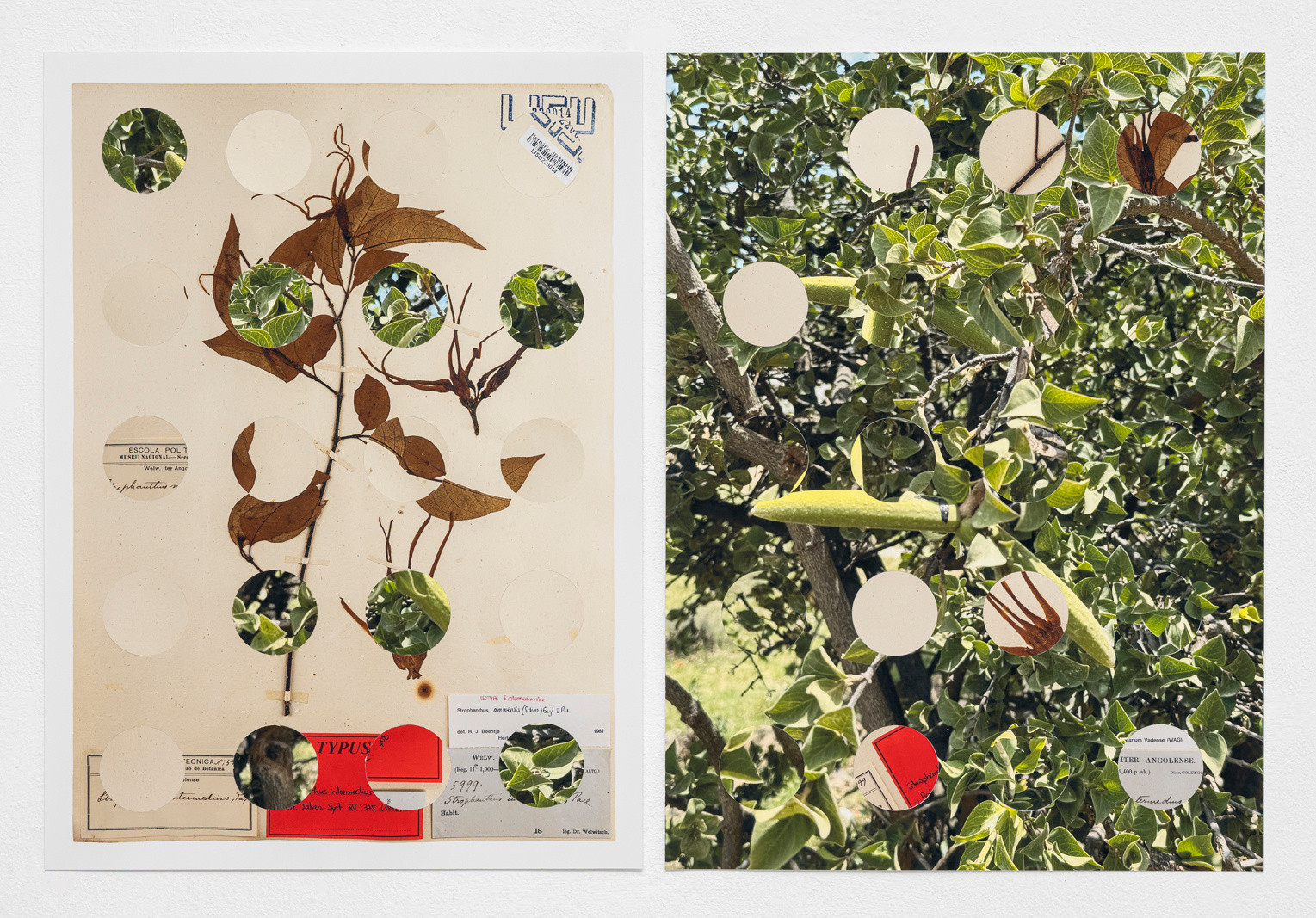
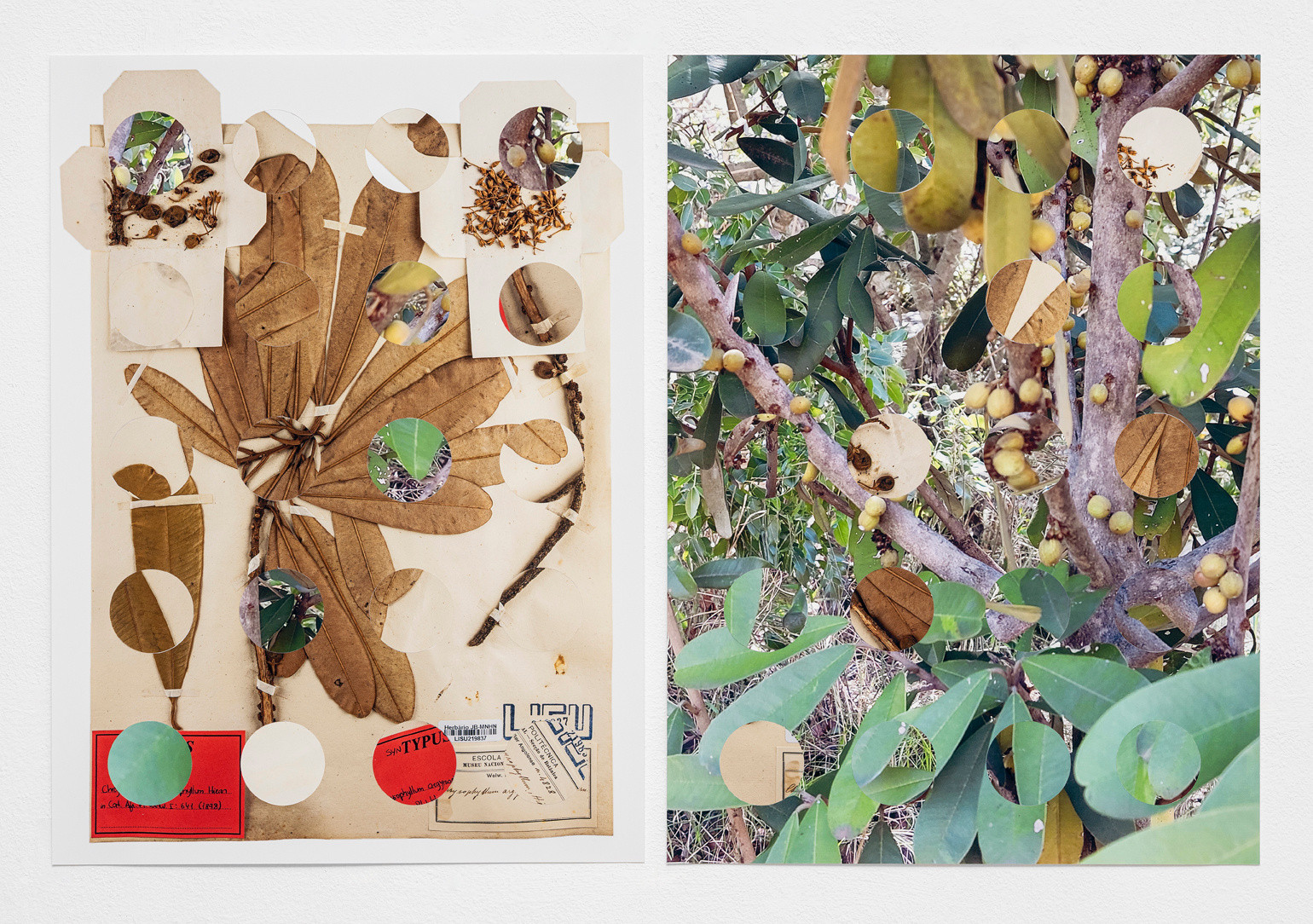
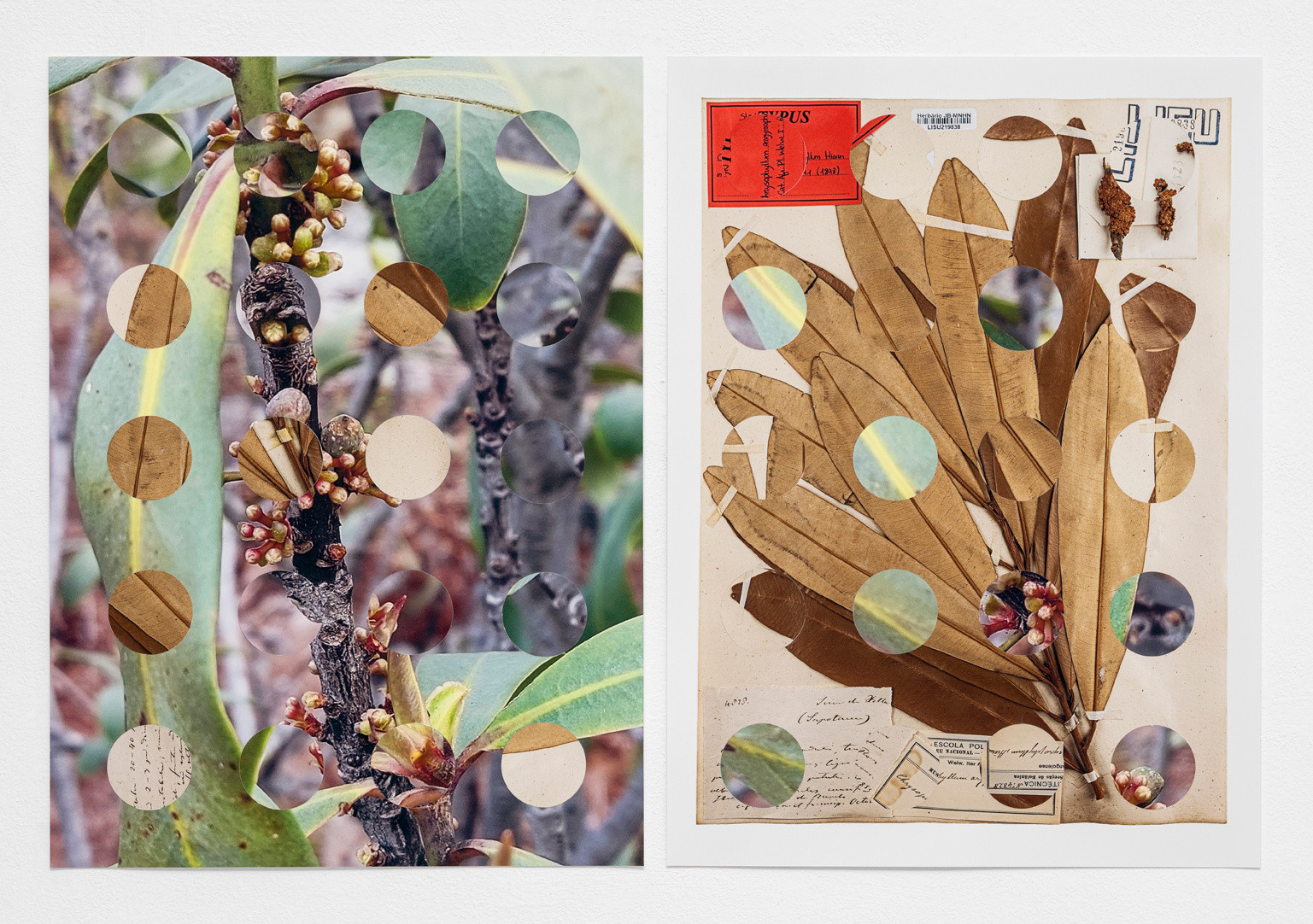
In 2024, while examining the herbarium, I asked myself: what do these plants, trees and shrubs actually look like “in real” contrasted with the aesthetics of the dried samples? I decided to travel to Angola to search for living plants in the areas where Welwitsch had found his specimen. In the provinces of Huíla and Namibe, together with the Angolan biologist Fernanda Lages, we located 20 living plants featured in the Iter Angolense Herbarium.
Plants 1850s and 2024
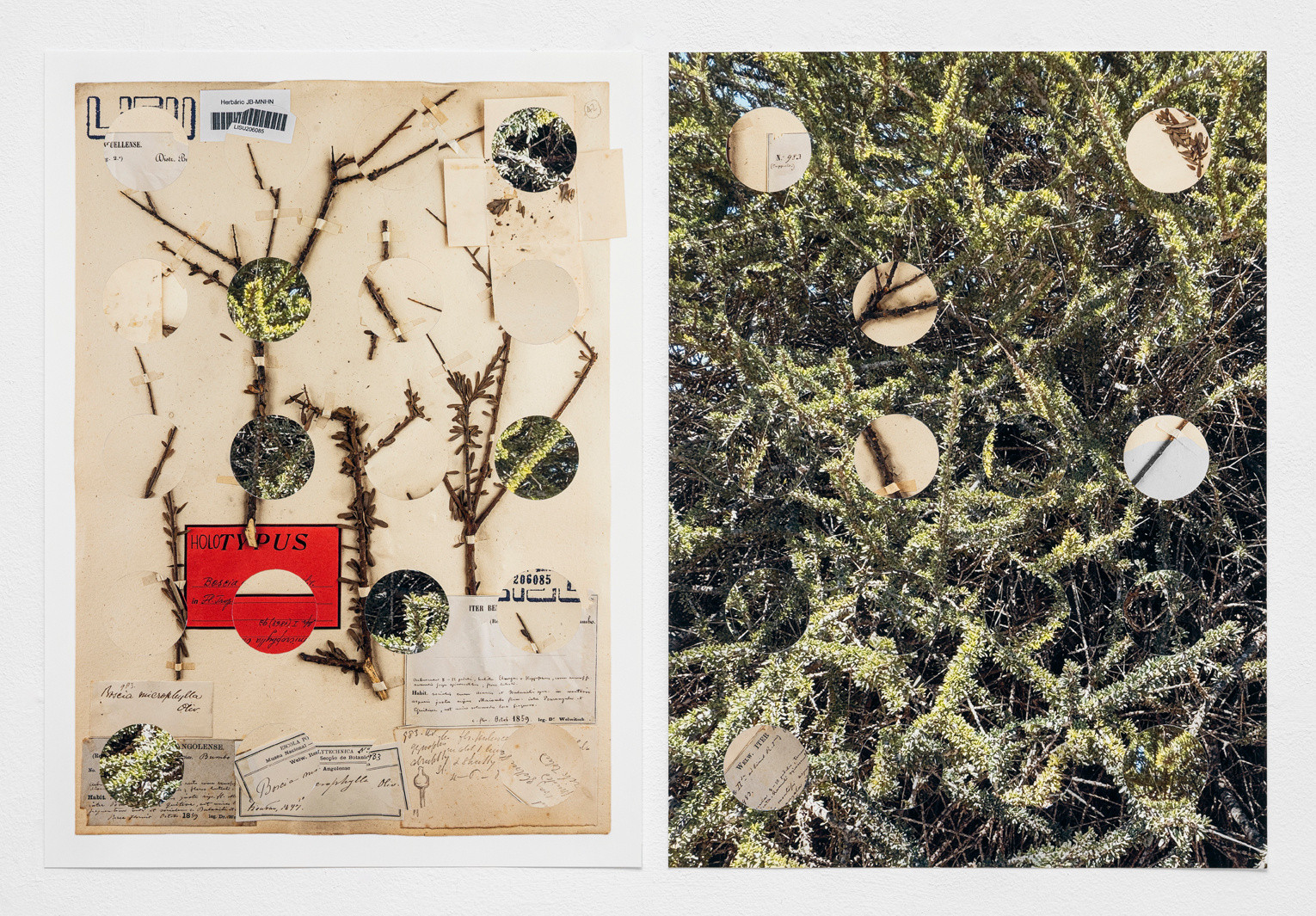
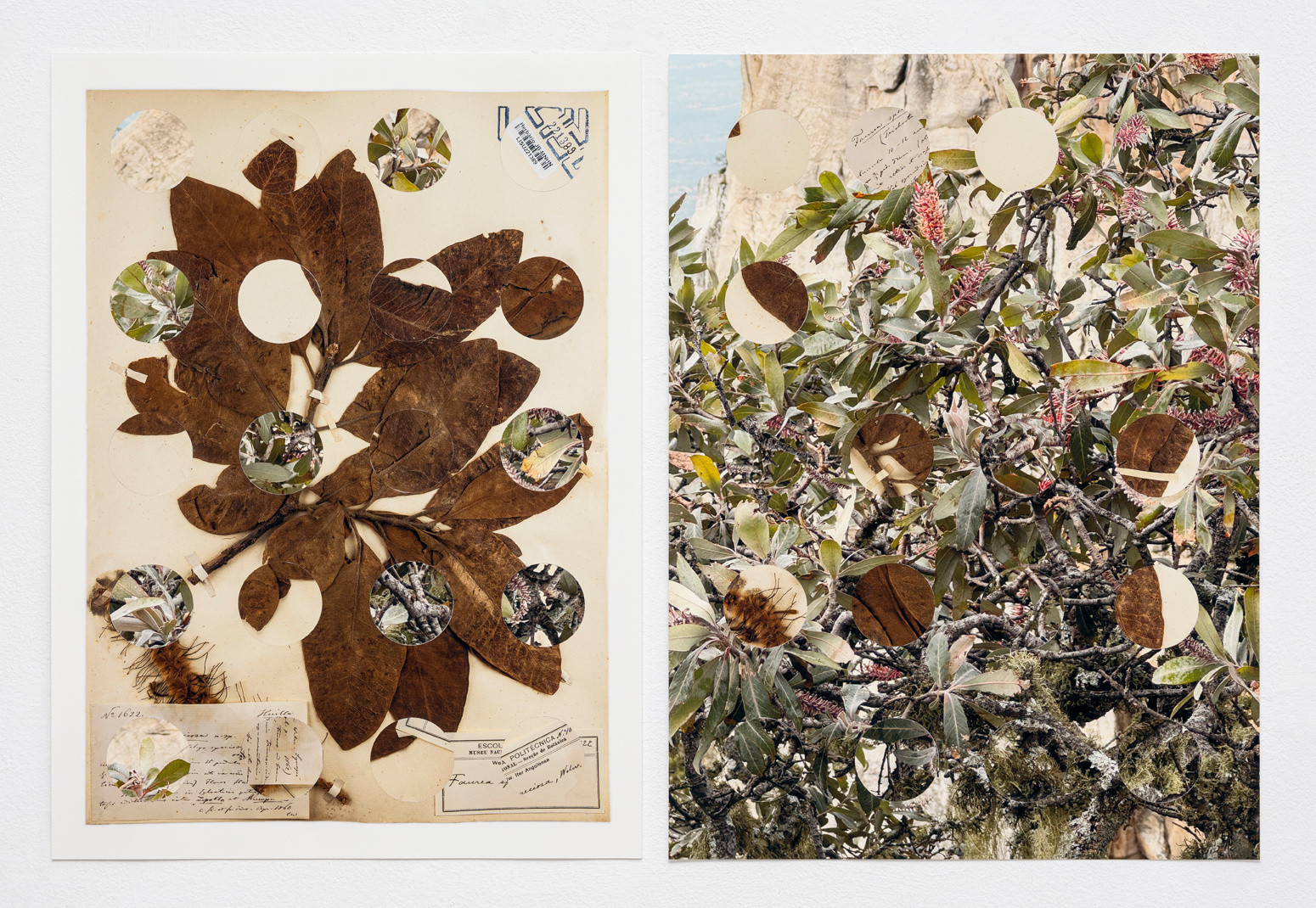
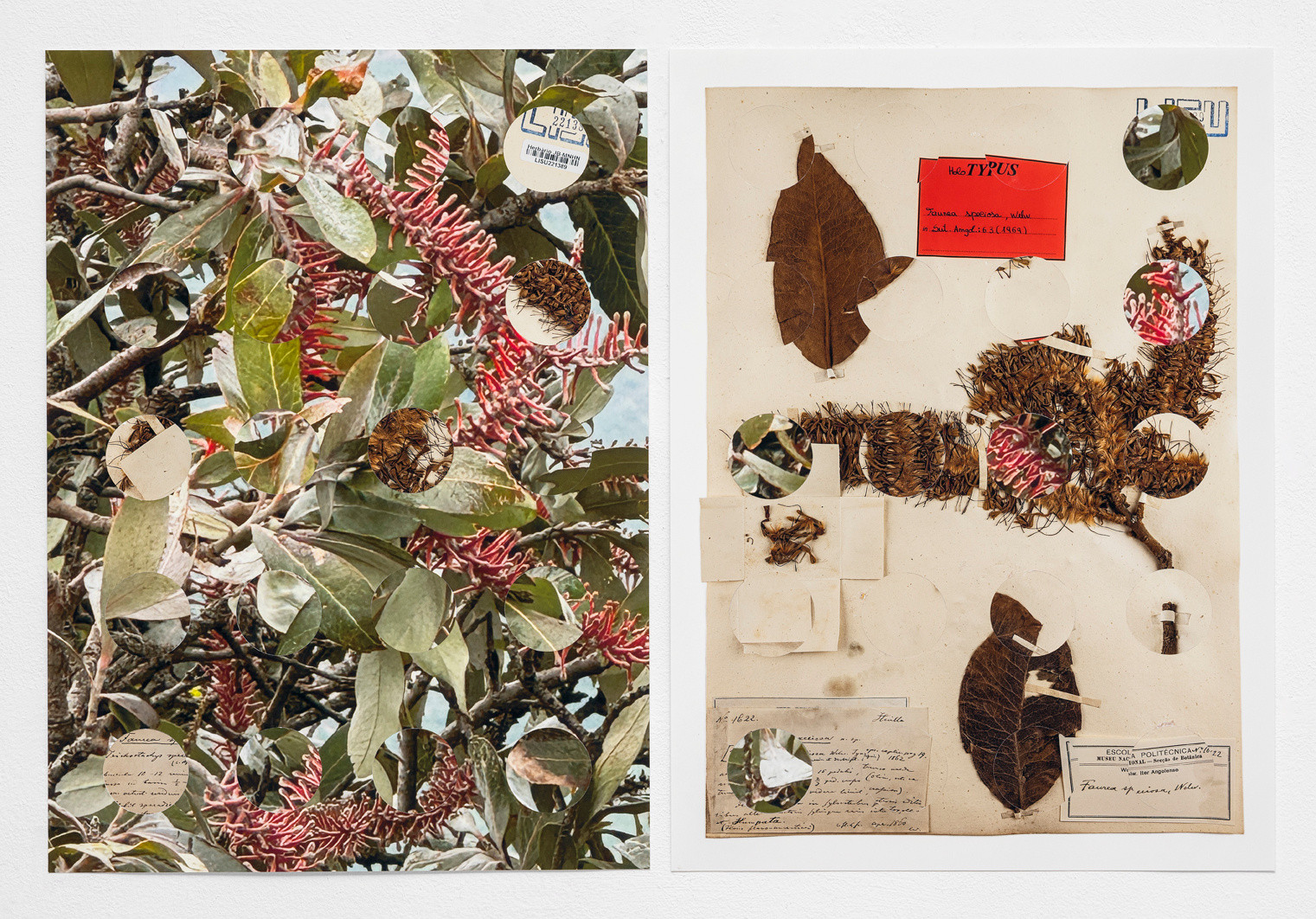
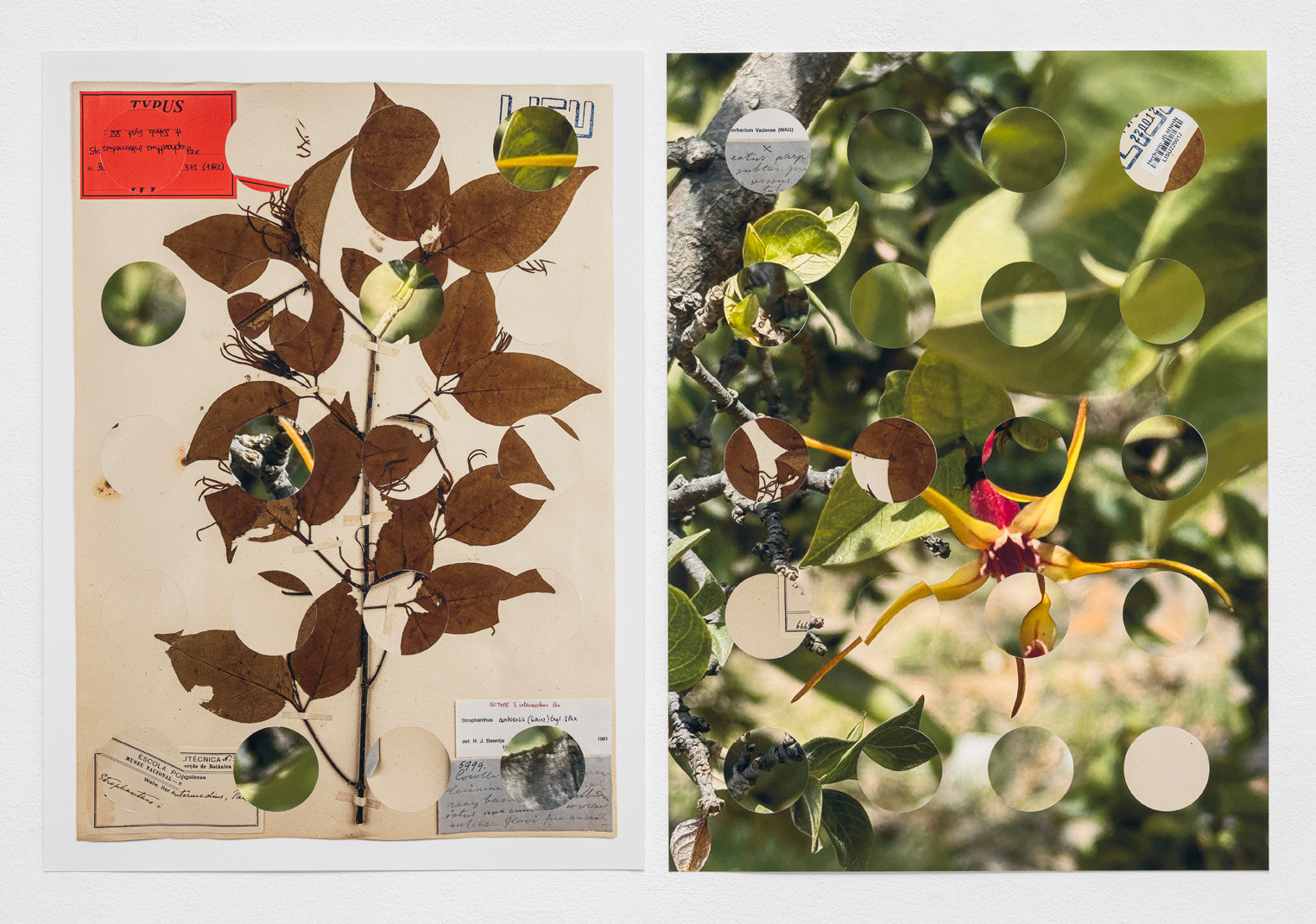
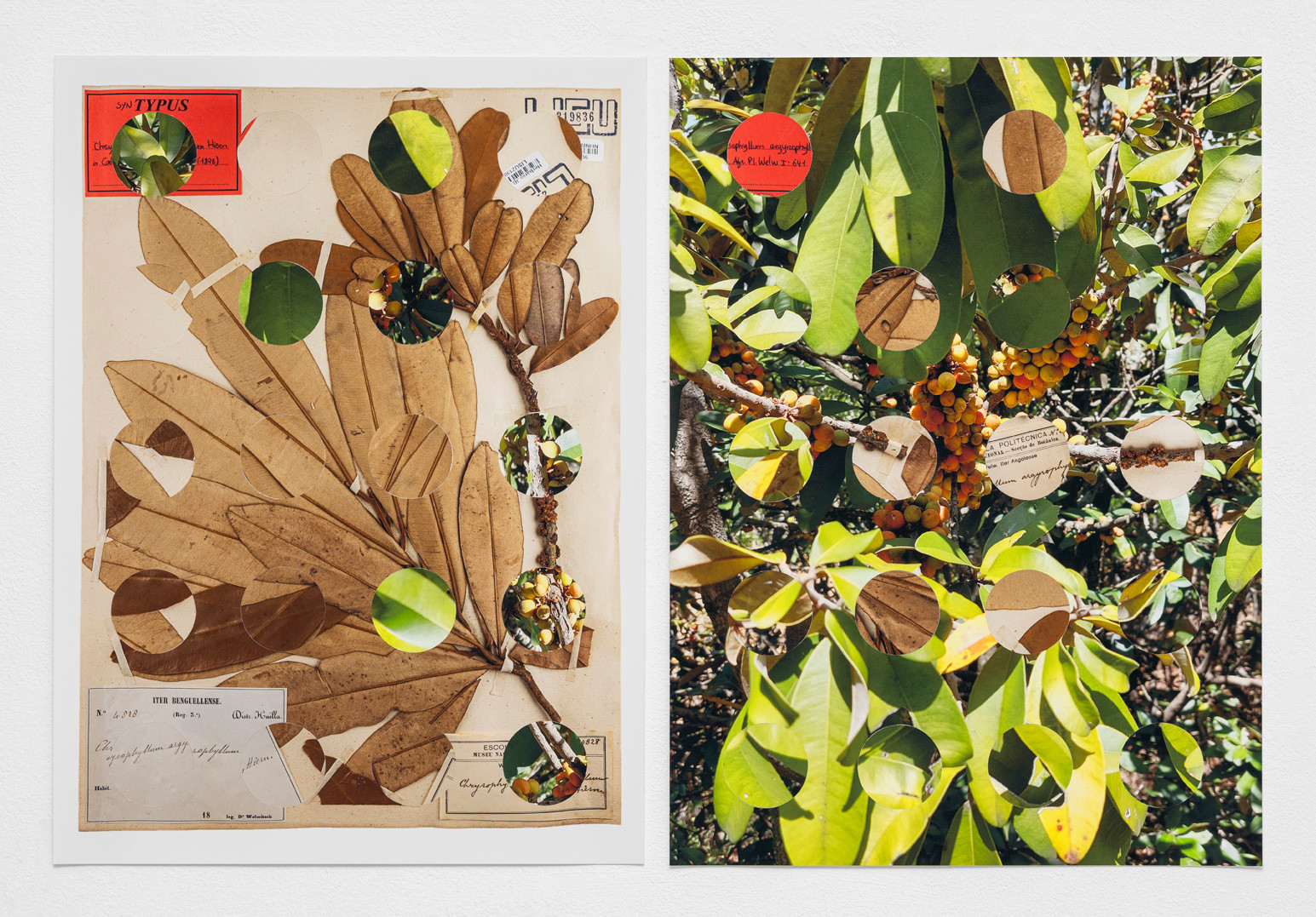
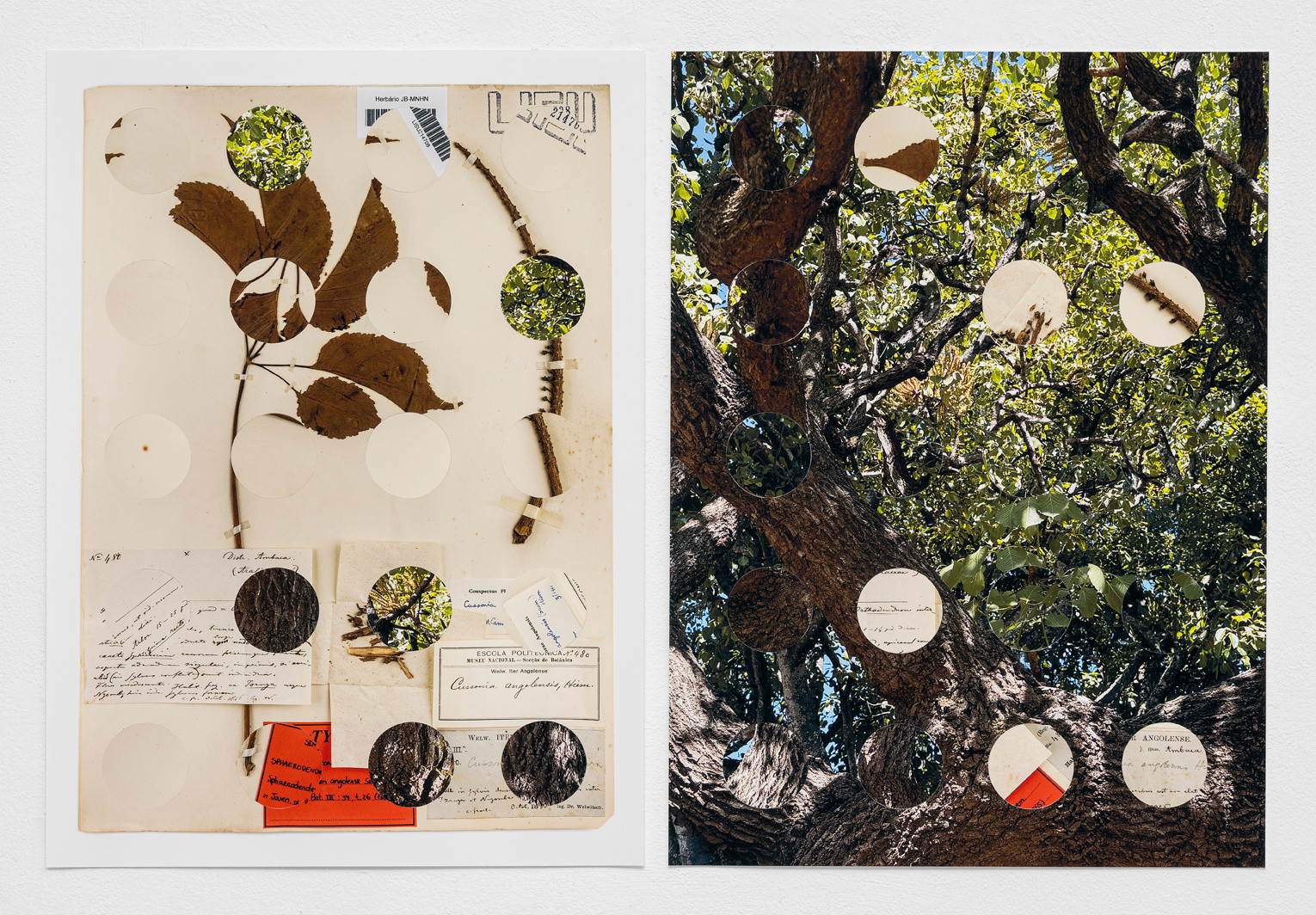
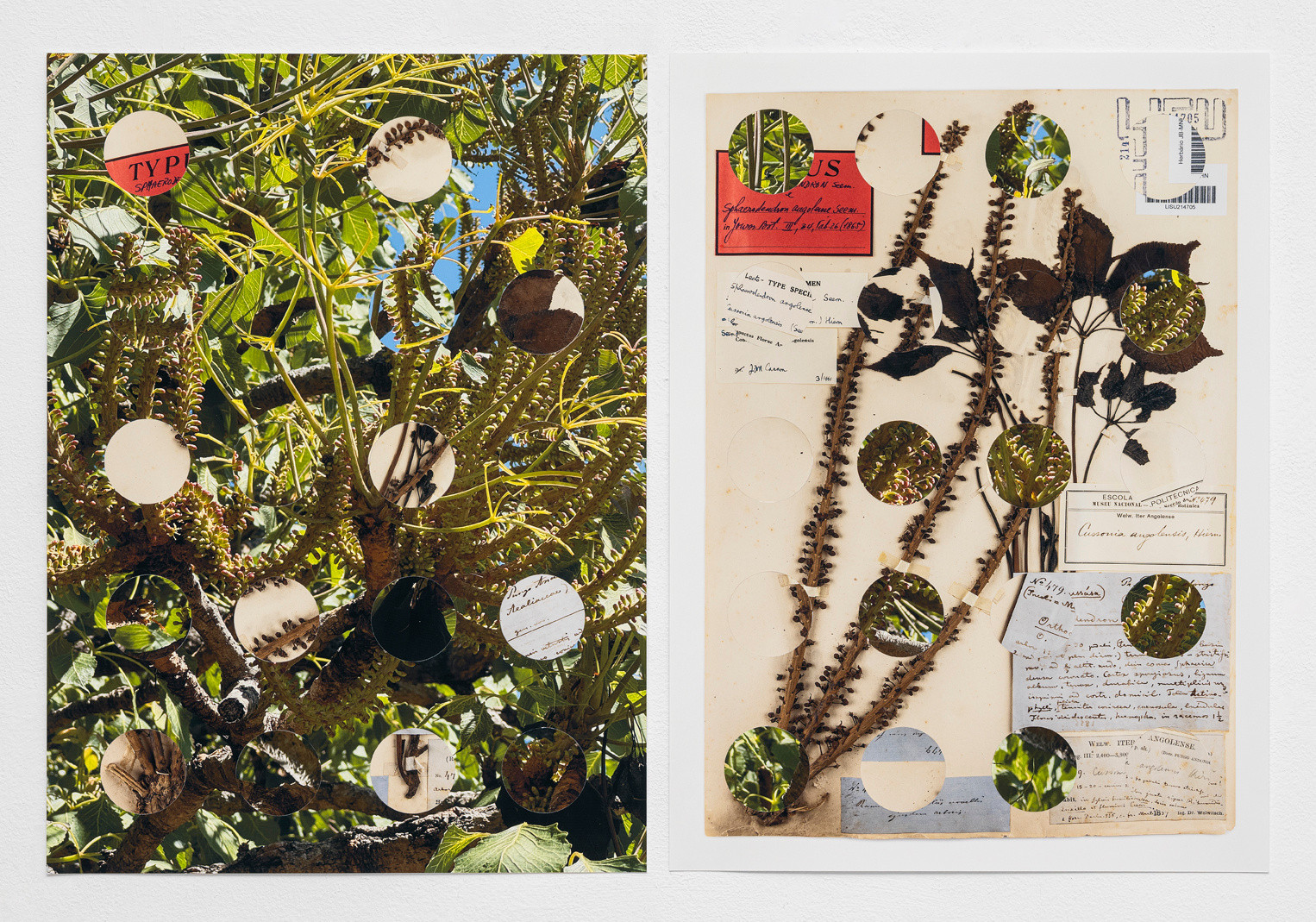
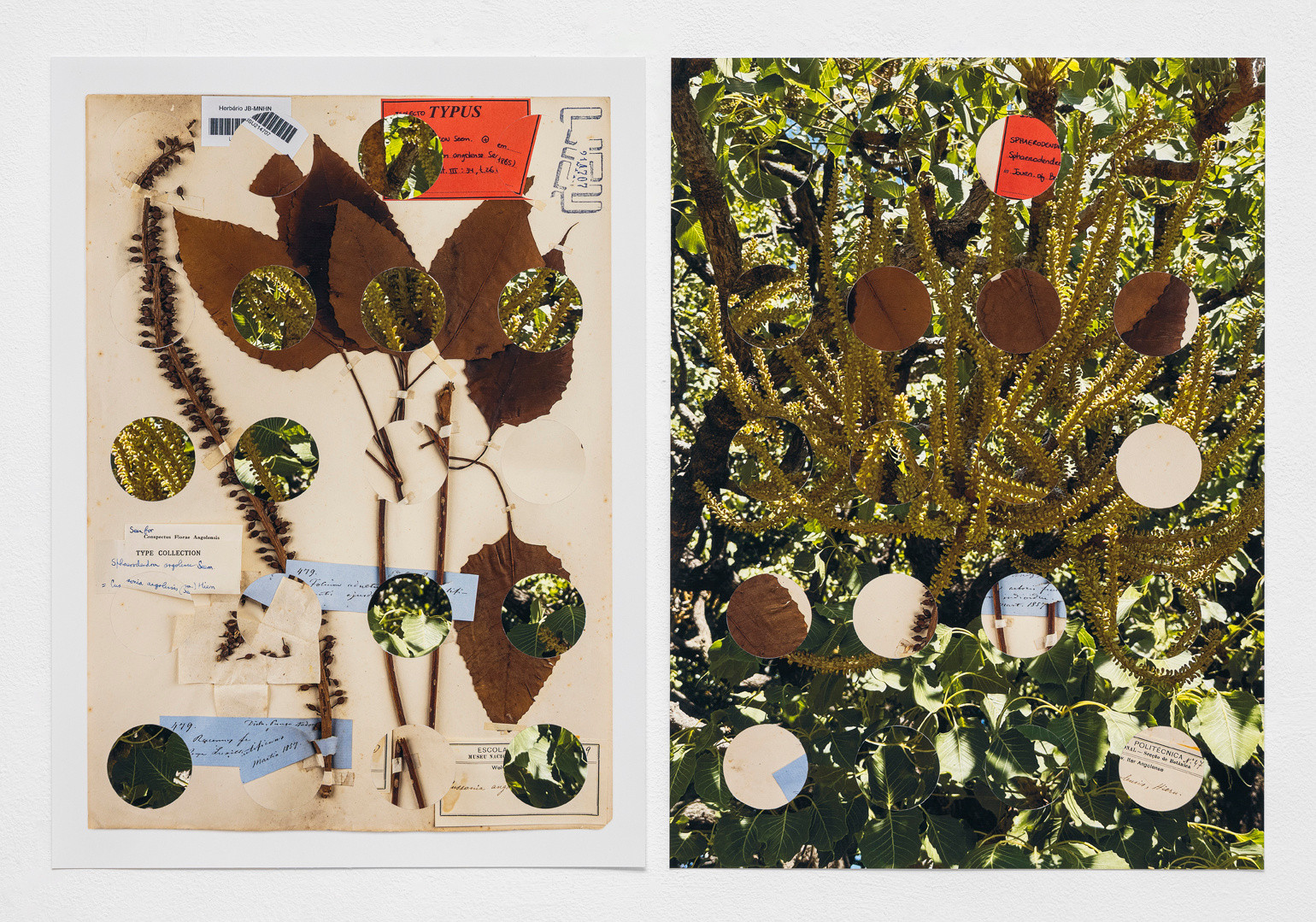
For the series “Plants 1850s and 2024”, I worked with the same five plants as in “One Plant, Two Names”, creating a dialogue between the photos of the herbarium and those of the same living plant. As in marquetry, circular cut-outs are slightly rotated or swapped with ones from the other photograph.
Fragment of Abundance stands at the beginning of a multiple part project.
Katrin von Lehmann, Berlin 2025